-
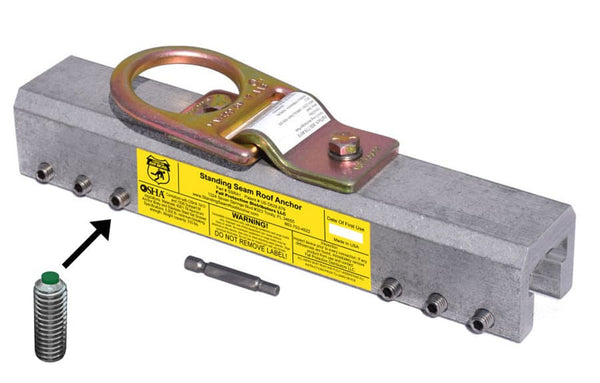
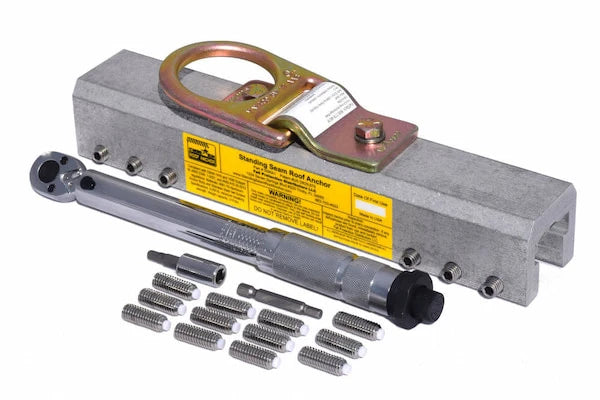
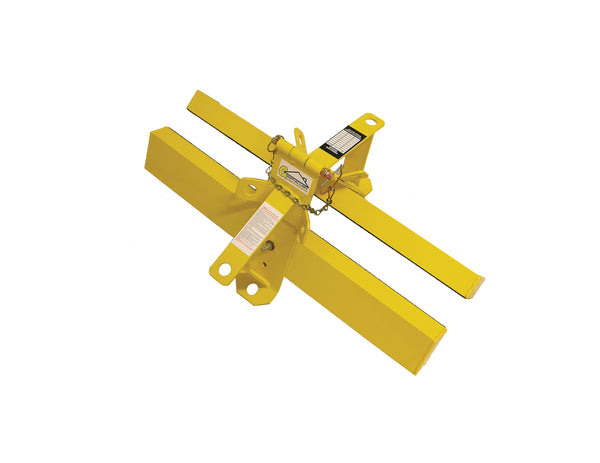
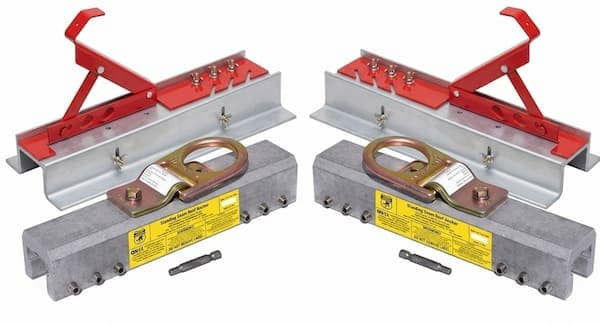
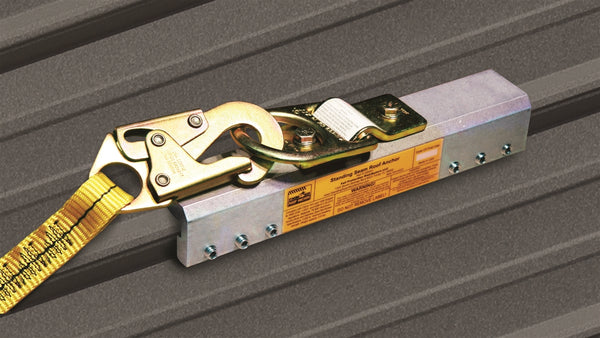
SSRA1 Standing Seam Roof Anchor – Nylon-Tipped Set Screw Fall Protection Anchor -
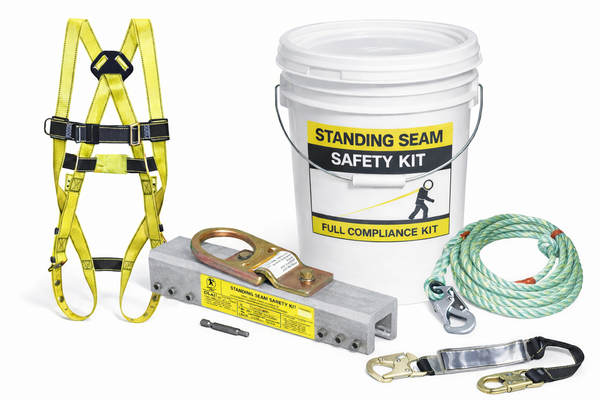
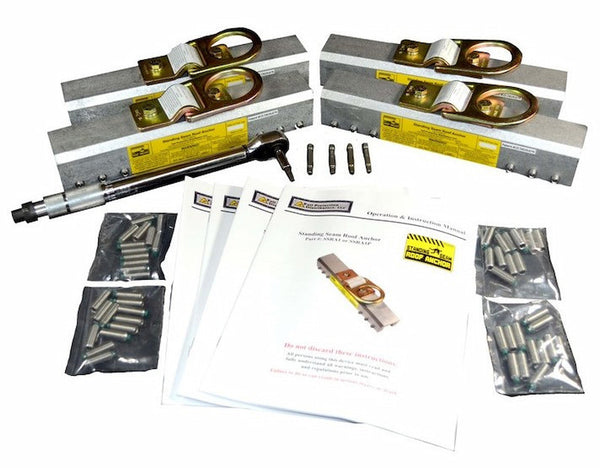
Standing Seam Safety Kit – Canadian Metal Roof Fall Protection Kit -
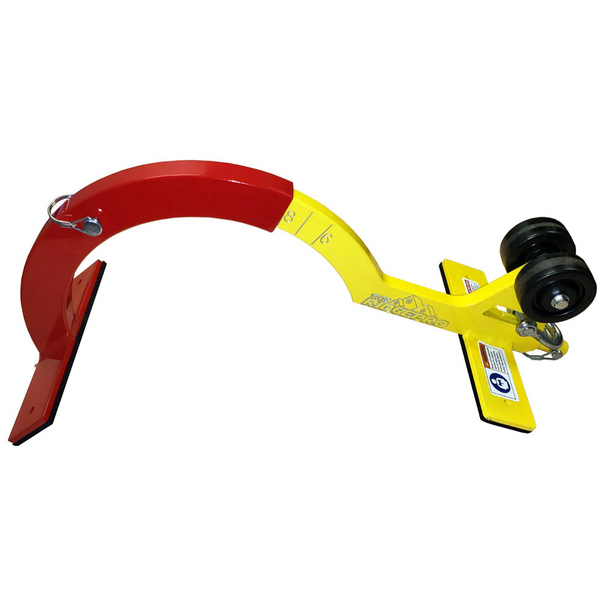
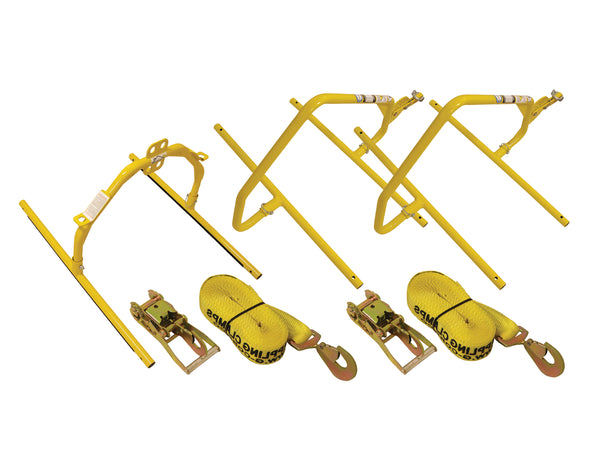
Canada Fall Protection RidgePro – Heavy-Duty Roof Snow Retention for Metal & Asphalt Shingles -
SSRA1 Standing Seam Roof Anchor – Cupped Tipped Non-Penetrating Fall Protection
SSRA2
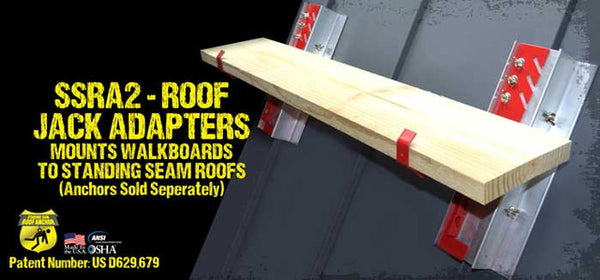
SSRA2 Roof Jack & Walkboard Adapters
Create stable footing for longer-duration work on standing seam roofs. Mounts roof jacks and walkboards to compatible standing seam anchor setups (anchors sold separately).
View SSRA2
SSRA3
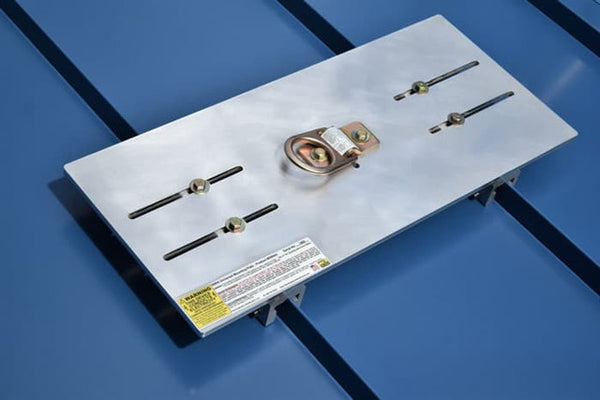
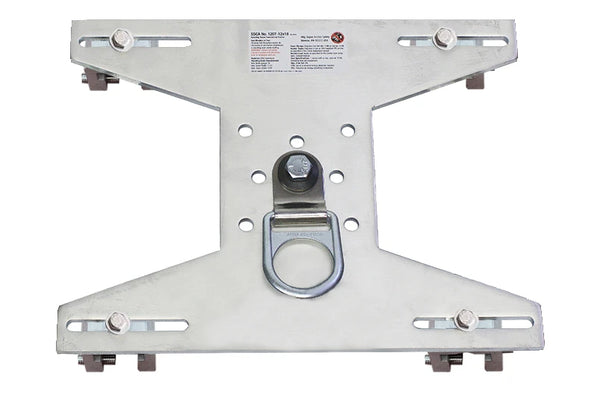
SSRA3 Standing Seam Horizontal Lifeline
Maintain continuous tie-off while moving along the roof span. Ideal for multi-worker access, long runs, and service routes on commercial standing seam metal roofs.
View SSRA3Note: System selection depends on seam profile, panel gauge, and site conditions. Contact our team if you want help matching the correct setup.
Non-Penetrating Fall Protection
Standing Seam Roof Anchors in Canada
Clamp-on, non-penetrating anchors engineered for standing seam metal roofs. Install a secure tie-off point without drilling through panels—protecting warranties and preventing leaks.
Choosing the Right Standing Seam Anchor
Standing seam roofs require specialized anchors that attach to the raised seam without compromising the panel. Match your anchor to your seam profile, work type, and access requirements.
Single-Worker Tie-Off
Standard seam clamp anchors provide a dedicated attachment point for solo workers doing inspections, repairs, or maintenance. Fast to install, compatible with SRDs and shock-absorbing lanyards.
Solar Panel Installation
Solar crews need multiple anchor points across large roof sections. Clamp-on anchors allow safe tie-off during panel staging, racking installation, and wiring without creating leak paths that could void solar or roofing warranties.
Walkboard & Platform Support
Some seam anchor systems include adapters for roof jacks and walkboards, creating stable work platforms on steep or slippery metal roofs. Essential for long-duration projects like commercial HVAC work or snow retention installs.
Horizontal Lifeline Systems
For multi-worker access or large commercial roofs, anchor plates designed for standing seam enable temporary horizontal lifeline installations. Workers move freely along the roof span while remaining continuously connected.
Understanding Seam Profiles & Compatibility
1. Identify Your Seam Type
Standing seam panels come in several configurations: snap-lock (concealed clip), mechanical lock (single or double seam), and bulb or T-seam profiles. Each requires specific anchor geometry. Check your roof manufacturer's documentation or measure the seam directly.
2. Measure Seam Dimensions
Anchors are designed for specific seam height and width ranges. Measure from the panel surface to the top of the seam (height), and across the widest point of the seam (width). Match these measurements to the anchor's stated compatibility range.
3. Verify Panel Gauge & Material
Thinner gauge panels (26-29 gauge) may require lower clamping forces to avoid deformation. Heavier structural panels (22-24 gauge) can handle higher loads. Most anchors specify minimum panel gauge and material type (steel, aluminum, copper).
4. Check Roof Pitch
Steep roofs increase fall arrest forces and potential for anchor sliding. Some seam anchor designs include anti-slip features or require additional set screws for pitches above 6/12. Always follow manufacturer specifications for your roof slope.
5. Follow Installation Torque Specs
Over-tightening can crush seams or strip threads; under-tightening risks anchor slippage. Use a calibrated torque wrench and adhere to the manufacturer's installation instructions. Document torque values for inspection records.
6. Respect Warranty Restrictions
Some roof manufacturers prohibit aftermarket attachments or specify approved anchor models. Review your roofing warranty before installing anchors. Non-penetrating clamp-on designs are generally more warranty-friendly than through-fastened systems.
Why Contractors Trust Our Standing Seam Solutions
Seam Profile Expertise
Not all standing seam is the same. Our team helps you match anchors to your specific panel profile, ensuring proper fit, load capacity, and warranty compliance. We've worked with everything from residential snap-lock to commercial structural standing seam.
Canadian Weather-Ready
Standing seam anchors face extreme thermal expansion, ice loading, and UV exposure. We stock anchors built with corrosion-resistant hardware, weather-sealed components, and materials rated for Canadian temperature swings.
System-Level Support
Anchors are just the start. We help you design complete fall protection systems—anchor placement, lifeline routing, swing fall calculations, and rescue planning—so your crew works safely and your system passes inspection.
Standing Seam Anchor FAQs
Do standing seam anchors require drilling through the roof panel?
No. Standing seam anchors in this category are non-penetrating, clamp-on designs that attach to the raised seam without drilling through the metal panel. This preserves the roof's water-shedding integrity and typically maintains manufacturer warranties. Some anchors use set screws that bear against the seam sides but don't penetrate the panel surface.
Will a clamp-on anchor damage my standing seam roof?
When installed correctly to manufacturer specifications, quality clamp-on anchors should not damage standing seam panels. Use appropriate torque settings, verify panel gauge compatibility, and avoid over-tightening. Minor cosmetic marks at clamp points are possible but typically don't affect roof performance. Always consult your roofing manufacturer if warranty preservation is critical.
Can I reuse standing seam anchors on multiple jobs?
Yes, most clamp-on seam anchors are designed for repeated installation and removal, making them ideal for roofing contractors working across multiple sites. Inspect anchors before each use for damage, corrosion, or wear. If an anchor has arrested a fall, retire it immediately. Keep a service log tracking installation history for quality control.
Do I need different anchors for solar panel installation?
Not necessarily, but solar projects often require more anchor points distributed across the roof. Some contractors prefer lightweight, low-profile anchors that don't interfere with panel placement. For large solar arrays, consider anchor systems compatible with horizontal lifelines to provide continuous fall protection while crew members move between rows.
Are standing seam anchors rated for leading edge work?
Not all standing seam anchors are rated for leading edge applications, which impose higher impact forces during a fall. Check manufacturer specifications for leading edge certification and ensure your entire fall protection system—anchor, connector, and harness—meets leading edge requirements. For near-edge work on standing seam roofs, consult CSA Z259.2.5 or a qualified engineer.
Professional Standing Seam Roof Anchor Systems for Canadian Metal Roofing
Standing seam metal roofing has become the dominant choice for commercial buildings, agricultural structures, and high-performance residential construction across Canada. Its concealed fastener design eliminates exposed screws that can leak, while thermal movement clips allow panels to expand and contract with temperature changes. But that same concealed fastener system creates a challenge for fall protection: where do you attach an anchor without drilling through the panel and compromising the roof's integrity? The answer is standing seam roof anchors—specialized clamp-on devices engineered to attach securely to the raised seam without penetrating the metal panel.
How Standing Seam Anchors Work
Unlike traditional roof anchors that fasten through decking or into structural members, standing seam anchors grip the vertical seam that runs the length of each panel. The anchor clamp wraps around or beside the seam, using set screws or clamping plates to create friction and mechanical engagement. When properly installed and torqued, the anchor becomes a certified tie-off point capable of arresting a fall without creating leak paths or voiding roof warranties.
The engineering behind these anchors accounts for the unique challenges of metal roofing: thermal expansion, panel gauge variability, seam profile differences, and the potential for anchor sliding on steep pitches. High-quality standing seam roof anchors incorporate anti-rotation features, adjustable clamping ranges, and materials resistant to galvanic corrosion when paired with steel, aluminum, or copper panels.
Understanding Seam Profiles: Not All Standing Seam Is the Same
The term "standing seam" encompasses several distinct panel and seam configurations, each requiring compatible anchor hardware. The three most common seam types in Canada are:
- Snap-lock (concealed clip) seams: These panels use hidden clips that snap into place without field seaming. The seam profile is typically 1" to 1.5" tall and relatively narrow. Snap-lock is common on residential and light commercial applications. Anchors for snap-lock must accommodate the lower seam height and often include features to prevent damage to the clip engagement.
- Mechanical lock seams: Single-lock or double-lock seams are created on-site using a hand seamer or electric seaming machine. These seams are taller (1.5" to 3"+) and more robust than snap-lock. Mechanical seam is the standard for commercial and industrial roofing. Anchors designed for mechanical seams offer wider clamping ranges and higher load ratings.
- Bulb or T-seam profiles: Less common but found on some architectural and structural panel systems, these seams have a rounded bulb or T-shaped cross-section. Specialized anchors with profiled clamps are required to properly engage these geometries.
Before ordering a standing seam anchor, identify your seam type and measure the seam height (from panel surface to seam top) and seam width (across the widest point). Anchors will specify compatible seam dimensions—using an anchor outside its rated range can result in poor engagement, panel damage, or anchor failure during a fall event.
Installation Best Practices for Clamp-On Anchors
Proper installation is critical to anchor performance and roof integrity. Here's a step-by-step approach used by experienced contractors:
Step 1: Verify seam condition. Inspect the seam for damage, loose seams, or corrosion. Anchors rely on seam integrity—if the seam is compromised, the anchor won't hold. Repair or reinforce damaged seams before installing anchors.
Step 2: Position the anchor. Place the anchor at the desired tie-off location, ensuring the clamp aligns squarely with the seam. Avoid positioning anchors directly over seam clips or fasteners, as this can interfere with clamping.
Step 3: Hand-tighten set screws. Insert set screws or clamping bolts and tighten by hand until the anchor is snug against the seam. Do not fully torque yet—this allows for final positioning adjustments.
Step 4: Verify alignment and orientation. Check that the anchor is perpendicular to the seam and that any anti-rotation features (tabs, wings, or secondary clamps) are properly engaged. Misalignment can cause uneven loading and potential anchor slippage.
Step 5: Torque to specification. Using a calibrated torque wrench, tighten set screws to the manufacturer's specified torque value. This is typically in the range of 15-30 ft-lbs, but always consult the product documentation. Over-tightening can deform thin-gauge panels or strip threads; under-tightening risks slippage.
Step 6: Inspect and test. Visually confirm that the anchor is seated properly with no gaps or visible panel distortion. Perform a pull test per provincial regulations (typically 200-250 lbs sustained load for 5 minutes) to verify secure installation. Document the test for compliance records.
Common Applications for Standing Seam Anchors
Solar panel installation: The solar boom has driven massive demand for standing seam roof anchors. Solar installers need safe access across large roof areas without creating penetrations that could leak or void the roof warranty. Clamp-on anchors allow crews to tie off while staging panels, installing racking, and running conduit. For large commercial solar arrays, multiple anchors positioned strategically across the roof provide continuous fall protection via horizontal lifeline systems.
Roof inspections and maintenance: Building owners with standing seam roofs need periodic access for inspections, gutter cleaning, and equipment service. Permanently installed or temporary standing seam anchors provide safe tie-off points for maintenance personnel, reducing liability and ensuring regulatory compliance. For facilities with frequent roof access, permanent anchor installations—verified and inspected annually—eliminate the need to rig temporary systems for every job.
Snow retention system installation: In Canadian climates, snow guards and retention systems are essential on metal roofs to prevent dangerous snow slides. Installing these systems requires working on steep, slippery slopes—often in cold conditions that amplify fall risks. Seam anchors allow installers to work tied off while drilling, fastening, and adjusting snow retention hardware.
HVAC and mechanical equipment service: Commercial buildings often have rooftop HVAC units, exhaust fans, and other equipment requiring regular service. Accessing these units on standing seam roofs without fall protection is a common violation cited during workplace inspections. Installing permanent seam anchors near equipment locations provides designated tie-off points for service techs, simplifying compliance and improving worker safety.
Integrating Seam Anchors Into Complete Fall Protection Systems
A standing seam anchor is the foundation of a fall protection system, but it's not sufficient on its own. Workers must wear properly fitted full body harnesses and connect to anchors using appropriate energy-absorbing lanyards or self-retracting lifelines (SRDs). For standing seam roofs, SRDs are often preferred because they maintain constant tension, reducing trip hazards and limiting free fall distance.
On large roofs or projects involving multiple workers, horizontal lifeline systems offer superior mobility and safety. A horizontal lifeline spans between two seam anchors, allowing workers to move freely along the roof length without disconnecting and reconnecting. This continuous connection reduces the risk of human error—a leading cause of fall-related injuries—and allows multiple workers to share the same system. Horizontal lifelines must be engineered to account for distributed loads, sag, and the potential for multiple simultaneous fall arrests.
For steep-pitch or large-area projects, consider adding walkboards or platforms supported by seam anchor adapters. Some anchor systems include roof jack attachments that create stable work surfaces on sloped roofs, reducing fatigue and improving productivity. Workers can move equipment, tools, and materials along the walkboard while remaining tied off to the anchor system.
Warranty Considerations and Roof Manufacturer Approval
One of the primary reasons contractors choose non-penetrating standing seam anchors is to preserve roof warranties. Most standing seam roof manufacturers explicitly prohibit through-fastening attachments that penetrate the panel, as these create leak paths and interrupt the roof's drainage plane. Drilling through a panel typically voids the manufacturer's warranty immediately.
However, clamp-on anchors aren't automatically warranty-compliant. Some roof manufacturers maintain approved anchor lists or specify installation requirements for aftermarket attachments. Before installing anchors, consult the roof warranty documentation and, if necessary, contact the manufacturer directly. If your project involves a large commercial building with a 20- or 30-year roof warranty, a quick call to confirm anchor compatibility can prevent costly disputes down the road.
For solar projects, dual warranty concerns exist: the roofing warranty and the solar panel warranty. Ensure your fall protection system is approved by both the roof and solar manufacturers. Some solar installers maintain relationships with specific anchor brands that have been pre-approved by major roofing manufacturers, streamlining the approval process.
Canadian Weather and Metal Roof Anchors
Canada's climate presents unique challenges for standing seam roof anchors. Thermal cycling—metal roofs can range from -40°C in winter to +60°C in summer sun—causes significant expansion and contraction. Anchors must accommodate this movement without loosening or binding. High-quality seam anchors use lock washers, thread-locking compounds, or spring-loaded mechanisms to maintain clamping force through thermal cycles.
Ice and snow loading add additional stress to anchors. A thick ice dam or heavy snow pack can exert lateral forces on seam anchors, potentially causing them to shift or dislodge. In northern climates or high-snowfall regions, consider anchors with enhanced anti-rotation features or install additional anchors to distribute loads. After major winter weather events, inspect anchors for displacement or damage before relying on them for spring and summer work.
Corrosion is another concern, especially in coastal regions with salt exposure or industrial areas with airborne pollutants. Use anchors constructed from stainless steel or galvanized steel with powder-coated finishes. Aluminum anchors are lightweight and corrosion-resistant but must be paired carefully with aluminum roofing panels to avoid galvanic corrosion (dissimilar metals in contact can corrode accelerated by moisture).
Inspection, Maintenance, and Anchor Lifespan
Even the best standing seam anchor requires regular inspection to ensure continued reliability. For temporary anchors moved between jobsites, inspect before every installation. For permanent anchors, conduct detailed inspections at least annually—or more frequently if the roof sees heavy use or extreme weather.
Key inspection points include:
- Set screw condition: Look for stripped threads, corrosion, or missing set screws. Replace damaged hardware immediately.
- Clamp integrity: Check for cracks, deformation, or metal fatigue in the clamp body. Any visible damage warrants anchor retirement.
- Seam condition: Verify that the seam itself hasn't been damaged or loosened by the anchor. Loose seams can compromise anchor holding power.
- Corrosion and finish: Inspect for rust, pitting, or coating breakdown. Surface corrosion may be cosmetic, but deep pitting weakens structural components.
- Attachment points: If the anchor has D-rings, connection plates, or swivel eyes, check for wear, cracks, or excessive movement. Load-bearing components must be in perfect condition.
Document all inspections in writing, noting anchor serial numbers (if available), inspection date, condition findings, and inspector name. These records demonstrate due diligence during regulatory inspections and provide a history for tracking anchor service life.
Anchors that have arrested a fall must be retired immediately, even if no visible damage is apparent. The dynamic forces during a fall event can introduce micro-cracks or material stress that isn't visible to the naked eye. Don't try to repair or modify anchors—replace them with certified equipment and document the retirement.
Compliance With Canadian Regulations
Fall protection regulations in Canada are enforced provincially, and while CSA Z259 standards provide a national framework, specific requirements vary by jurisdiction. Ontario's Construction Regulation 213/91, BC's Occupational Health and Safety Regulation, Alberta's OHS Code, and Quebec's CNESST standards all mandate fall protection at heights above 3 meters (approximately 10 feet) for most construction activities. Some jurisdictions lower this threshold for high-risk work like leading edge or open-sided platforms.
Anchors must meet CSA Z259.15 requirements, which specify a minimum anchorage strength of 5,000 pounds-force (22.2 kN) per attached worker or be part of an engineered system with a 2:1 safety factor. When selecting standing seam anchors, verify CSA Z259.15 compliance or equivalent ANSI Z359.18 certification. Third-party testing and certification provide assurance that anchors have been evaluated for strength, durability, and proper installation methods.
Some provinces require written fall protection plans for commercial projects, documenting anchor locations, equipment specifications, worker training, and rescue procedures. If your business operates across multiple provinces, design your fall protection program to meet the strictest applicable standards. Consulting a qualified safety professional or engineer ensures your system complies with local regulations and withstands scrutiny during inspections.
Training and Safety Culture
The most sophisticated standing seam roof anchor won't prevent falls if workers don't use it correctly—or at all. Fall protection training is legally required in every Canadian province, and training must cover hazard identification, equipment selection, proper use of anchors and harnesses, fall clearance calculations, and rescue procedures.
Training should be hands-on and job-specific. Workers need to practice installing anchors, verifying seam compatibility, connecting lanyards, and recognizing when fall protection is required. Annual refresher training reinforces critical skills and updates crews on new equipment or regulatory changes.
Beyond formal training, foster a safety culture where fall protection is non-negotiable. Supervisors should lead by example, wearing harnesses and connecting to anchors even for brief tasks. Normalize pre-job safety discussions where crew members review anchor placement, fall hazards, and emergency procedures. Encourage workers to speak up if they observe unsafe conditions or shortcuts. The goal is to make fall protection instinctive—a reflex built through repetition and consistent enforcement.
Why Source Standing Seam Anchors From a Canadian Supplier?
Buying standing seam roof anchors from a Canadian distributor offers practical and regulatory advantages. First, there's speed: domestic inventory ships faster without customs delays, border inspections, or brokerage fees. When your crew is on-site waiting for anchors, every day of delay costs money and disrupts schedules.
Second, there's compliance confidence: Canadian suppliers stock products designed to meet CSA standards and tested under conditions relevant to our climate and construction practices. When you're dealing with provincial inspectors or responding to client inquiries about equipment certification, having CSA-compliant gear from a reputable Canadian source simplifies documentation and reduces liability exposure.
Third, there's support: when you have questions about seam compatibility, installation torque, or system design, you're dealing with people who understand Canadian jobsites, weather conditions, and regulations. At Fall Protection Canada, our team includes former roofers, solar installers, and safety professionals who've navigated the same challenges you face. Whether you need help matching an anchor to an unusual seam profile, interpreting warranty restrictions, or designing a fall protection system for a complex commercial project, we're here to provide guidance—not just sell products.
The Future of Standing Seam Fall Protection
As standing seam metal roofing continues to gain market share—driven by durability, energy efficiency, and aesthetic appeal—the demand for effective fall protection solutions grows. Solar adoption accelerates this trend: commercial and agricultural buildings across Canada are installing solar arrays on standing seam roofs, creating thousands of new rooftop work sites every year.
Anchor technology continues to evolve. Newer designs incorporate tool-free installation, quick-release mechanisms for fast deployment and removal, and integrated load indicators that show when clamping force is correct. Some manufacturers are developing "smart" anchors with embedded sensors that monitor clamping pressure, alert users to anchor movement, and log installation and inspection data digitally.
Regardless of technological advances, the fundamentals remain: understanding seam profiles, proper installation, regular inspection, comprehensive training, and a commitment to safety culture. Investing in quality standing seam roof anchors and using them correctly protects your crew, preserves roof warranties, ensures regulatory compliance, and provides the peace of mind that comes from knowing your team can work safely at height.
Important: Standing seam roof anchors must be selected, installed, inspected, and used in accordance with manufacturer instructions, applicable CSA standards (including CSA Z259.15), and provincial or territorial occupational health and safety regulations. Anchor selection requires verification of seam profile compatibility, panel gauge, and roof system warranty restrictions. This webpage provides general information only and does not replace professional engineering judgment, competent person oversight, or worker training. Fall Protection Canada is not liable for improper installation, seam profile mismatch, or failure to follow manufacturer specifications. For warranty-sensitive installations or complex projects, consult the roof manufacturer and a qualified professional engineer or safety consultant.