
SCROLL
LIFELINES · CSA Z259.2.1 / Z259.2.5 · Z259.13
Vertical & Horizontal Lifelines in Canada
Lifeline systems that let a worker move while staying tied off: vertical lifeline assemblies with rope grabs for climbing and roofing, and horizontal lifeline (HLL) systems that run between two anchors so a worker can travel along a span. CSA Z259.2.1/.2.5 (vertical) and Z259.13 (horizontal), stocked in Paris, Ontario and priced in CAD — each system lists its actual certification, stated plainly.
- Vertical + rope grab
- Horizontal (HLL)
- CSA Z259.2.1 / Z259.13
- Ships from Paris, ON
- CAD — no duties
Shop Lifelines
LIVE INVENTORY · CAD PRICING · ADD TO CART
-
-
-
-
SALE 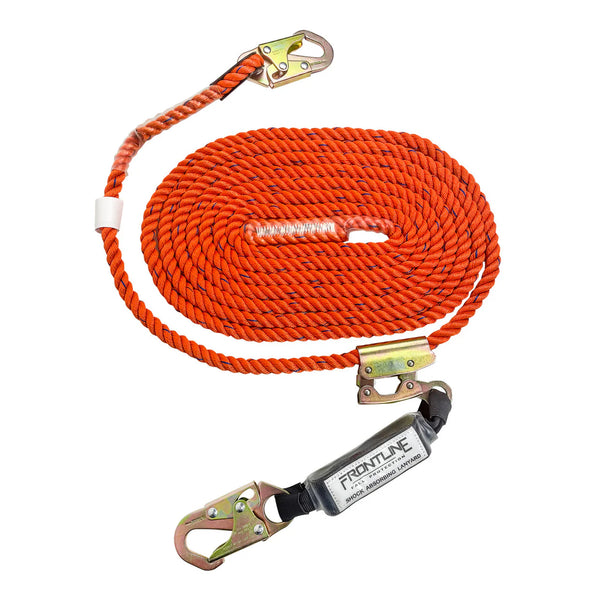 Fall Protection Canada
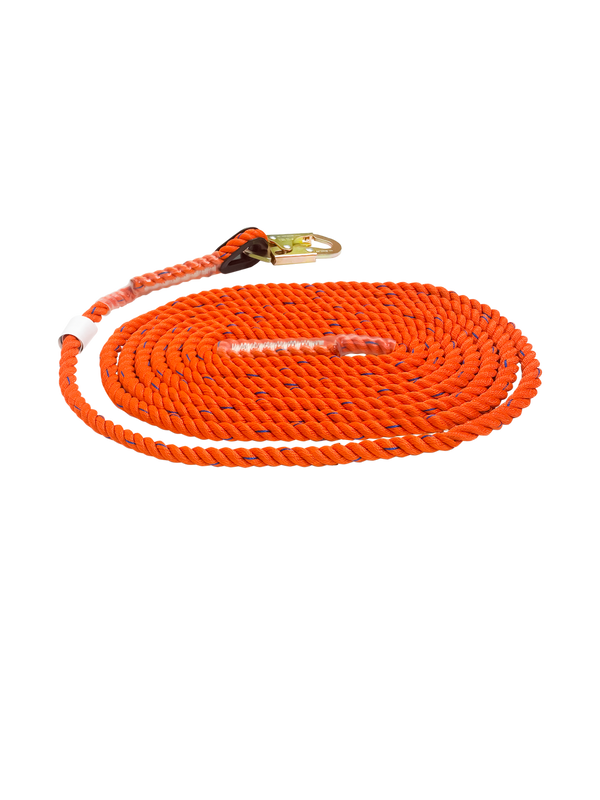
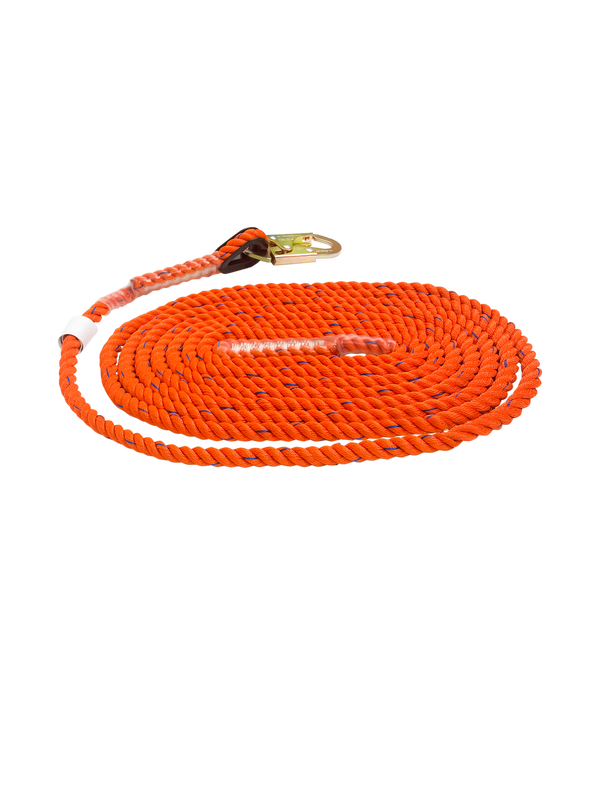
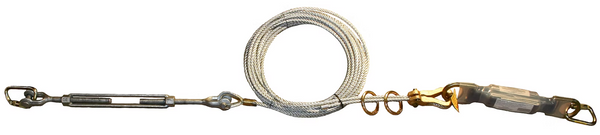
Frontline VLPR3L Vertical Lifeline Kit with Rope Grab & S...
$250.00$229.00Options -
-
SALE 
-
SALE 
-
SALE 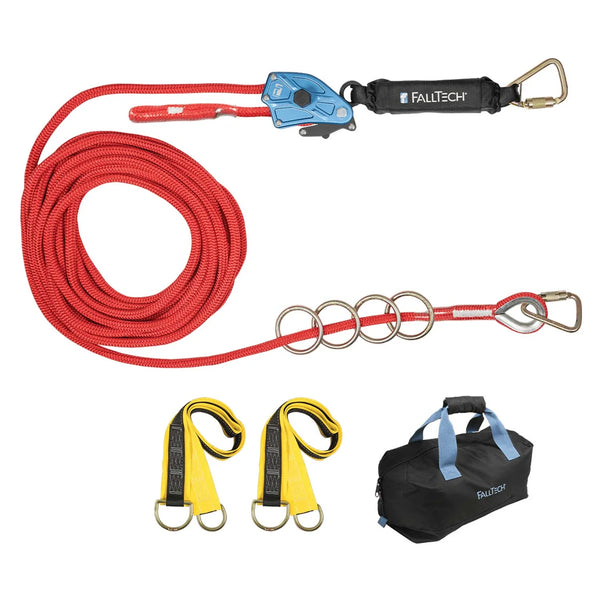 Fall Protection Canada
FallTech 772060 | 60' 4-Person Temporary HLL System | CSA...
$2,000.00$1,799.99
Complete the fall arrest system
LIFELINES WORK WITH THE GEAR AROUND THEM
-
PAIR WITH
 Full-body harnessesA lifeline connects to the dorsal D-ring of a CSA harness.Shop harnesses →
-
ALTERNATIVE
 Self-retracting lifelinesSRLs give a shorter free fall where a fixed lifeline won't fit.Shop SRLs →
-
CONNECTOR
 Lanyards & connectorsLink a rope grab or HLL traveller to the harness.Shop lanyards →
-
END ANCHORS
 Anchors & tie-off pointsLifelines need rated end anchors at each connection.Shop roof anchors →
-
DONE-FOR-YOU
 Complete kitsRoofer's kits bundle a vertical lifeline, harness and anchor.Shop kits →
-
ALL PPE
 Browse all PPEHarnesses, lanyards, SRLs, lifelines and connectors.Shop PPE →
Vertical vs horizontal lifelines
VERTICAL LIFELINE + ROPE GRAB
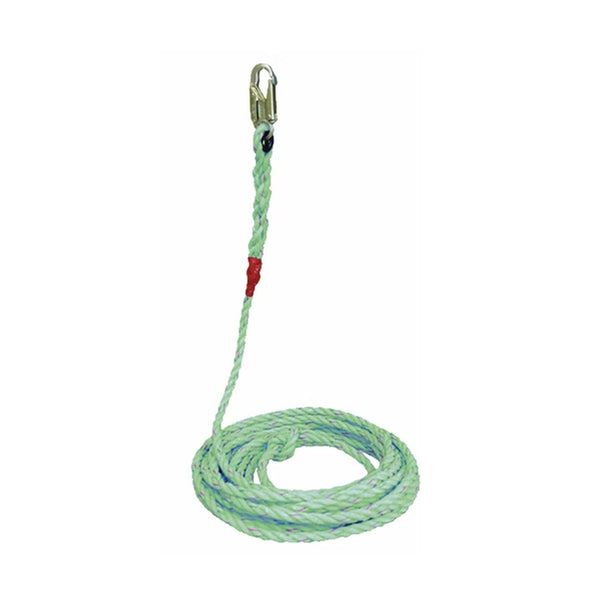
A vertical lifeline runs up-and-down — a rope (or cable) anchored at the top, with a rope grab that travels with the worker and locks on a fall. Used for climbing, steep roofs and ladders. Match the rope grab to the lifeline's rope type and diameter. Governed by CSA Z259.2.1 / Z259.2.5.
HORIZONTAL LIFELINE (HLL)
A horizontal lifeline runs side-to-side between two anchors so a worker can move along a span while tied off via a traveller. Temporary HLLs suit steel and formwork; many systems are engineered for the span and number of users. Governed by CSA Z259.13.
ANCHORS & COMPATIBILITY
Both ends of a lifeline need rated anchors, and the worker connects through a harness and connector. Confirm rope-grab/traveller compatibility and fall clearance. Unsure? Call 437-475-2066.
Vertical & horizontal lifelines for Canadian jobsites
A lifeline lets a worker stay connected while they move — up a pitch or along a span. Fall Protection Canada stocks vertical and horizontal lifelines: vertical lifeline assemblies (rope plus a rope grab) for roofing and climbing under CSA Z259.2.1/.2.5, and horizontal lifeline (HLL) systems that run between two anchors under CSA Z259.13 — all shipped from Paris, Ontario in CAD. Where a fixed lifeline won't fit or clearance is tight, a self-retracting lifeline (SRL) is often the better connector.
A lifeline is one part of a connected fall arrest system. It connects to the dorsal D-ring of a full-body harness — sometimes through a lanyard or rope grab — and ties off to rated anchors at each end. Want it bundled? Roofer's kits pair a vertical lifeline, harness and anchor. Browse the full PPE range or read our equipment guide — or call 437-475-2066 for a 24-hour quote.
Lifeline compliance & inspection guides
CSA Z259 · ANSI Z359 · PROVINCIAL OHS
- INSPECTION
How to Inspect Your Fall Protection Equipment: A Canadian Field Guide
Pre-use and periodic inspection steps for lifelines, rope grabs, harnesses and connectors.
- COMPLIANCE
CSA vs ANSI Fall Protection Standards in Canada: What's Actually Legal by Province
When ANSI-labelled lifelines are accepted and when CSA is mandatory — province by province.
- EQUIPMENT
Canadian Fall Protection Equipment Guide 2026
The complete buyer's guide to anchors, harnesses, lanyards, SRLs and lifelines for Canadian jobsites.
Lifelines ship to every province — compliance guidance for Ontario, Quebec, Alberta, BC, Manitoba, Saskatchewan, Nova Scotia and Newfoundland & Labrador.
Lifelines — common questions
ANSWERS YOU CAN CITE
01What's the difference between a vertical and horizontal lifeline?
A vertical lifeline runs up-and-down — a rope or cable anchored at the top with a rope grab that follows the worker, used for climbing or steep-roof work (CSA Z259.2.1/.2.5). A horizontal lifeline (HLL) runs side-to-side between two anchors so the worker can travel along a span while tied off (CSA Z259.13). Both let the worker move while connected; the right one depends on whether your hazard is up a pitch or along a level run.
02What is a rope grab and do I need one?
A rope grab is the device that rides a vertical lifeline and locks onto the rope if the worker falls, while sliding freely during normal movement. A vertical lifeline assembly generally needs a compatible rope grab matched to the rope's type and diameter — you connect from the rope grab to the harness, often through a short energy-absorbing lanyard. Check each product page for the included or compatible rope grab.
03Do horizontal lifelines need to be engineered?
Often, yes. A horizontal lifeline imposes large forces on its end anchors, and the sag, span and number of simultaneous users affect fall clearance — so many permanent HLLs must be designed or signed off by a qualified engineer, and temporary systems must be installed per the manufacturer's rated configuration. Always follow the system's instructions for span, anchor strength and maximum users.
04How does a lifeline connect to my harness?
Through the dorsal (back) D-ring of a full-body harness. On a vertical lifeline you connect via the rope grab (often with a short lanyard); on a horizontal lifeline you connect via a traveller and a lanyard or SRL. Both ends of the lifeline tie off to rated anchors.